




At Home For Life: Stylish Safety Upgrades That Won’t Make Your Bathroom look Like A Hospital
Last Updated October 22, 2026

Ask most homeowners what they picture when they hear “aging in place,” and the answer is often a hospital room: stainless rails, beige surfaces, harsh overhead light. It’s no wonder so many people put off safety upgrades. Nobody wants their home, especially their bathroom, to feel like a care facility.
Here’s the good news: that picture is out of date. Today’s safest products are designed to look like what they are in the hands of a good designer: beautiful, considered choices. In many of the bathrooms our team has remodeled, you’d never guess which features were added for safety and accessibility.
Below, we walk through five categories of upgrades that make a home easier to live in for years to come, and how to choose versions that look like style decisions rather than medical equipment.
Grab bars that look like design choices
A well-chosen grab bar can read as a towel bar, a shelf edge, or a sculptural accent. The key is to treat it as part of the hardware package, not an afterthought.
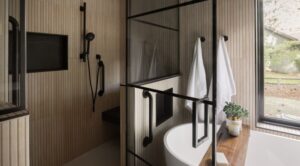
- Match your finish. Grab bars now come in the same finishes as faucets and cabinet pulls, such as matte black, brushed brass, and polished nickel. When everything coordinates, the bar disappears into the design.
- Look for dual-purpose pieces. Some grab bars double as towel bars, toilet paper holders, or shower shelves, while still being rated to support body weight.
- Plan the blocking early. A grab bar is only as strong as what it’s anchored to. During a remodel, your Neil Kelly team can add solid backing inside the walls, even in spots where you don’t want a bar yet. That makes it simple to add one later without opening the wall.

Levers, bars, and touchless fixtures
Round knobs require a firm grip and a twist, which gets harder with arthritis, an injury, or simply full hands. Levers and bar pulls can be operated with a palm, an elbow, or a loose grip.
- Faucets: Single-lever faucets are a clean, modern look. Touchless faucets go a step further and are especially handy in the kitchen when your hands are messy.
- Doors: Lever door handles come in nearly every architectural style, from traditional to minimalist.
- Cabinets: Long bar pulls are easier to grab than small knobs, and they suit contemporary and transitional kitchens alike.
- Showers: Lever-style valves are easier to adjust. Some showers also let you set your preferred temperature in advance.
The result looks streamlined and current, the kind of detail you’d choose even without a safety reason.

Comfortable toilets and bidets
A bidet toilet, or a bidet seat added to an existing toilet, supports personal hygiene and independence, particularly for anyone with limited mobility or reach. Features vary by model, but may include warm water cleansing, a heated seat, a dryer, a nightlight, and a remote or wall-mounted control.
They also happen to look sleek. Many have a smooth, skirted base that’s easier to clean and fits right into a spa-style bathroom.
A few things to plan for:
- Power: Most electric bidets need an outlet near the toilet. That’s easy to add during a remodel and harder afterward.
- Height: Comfort-height toilets sit a bit taller than standard models, which can make sitting and standing easier.
- Placement: If a grab bar is nearby, coordinate their positions so neither gets in the way of the other.

Slip-resistant flooring
Bathroom floors get wet, and glossy tile gets slick. Slip-resistant flooring adds traction without sacrificing style.
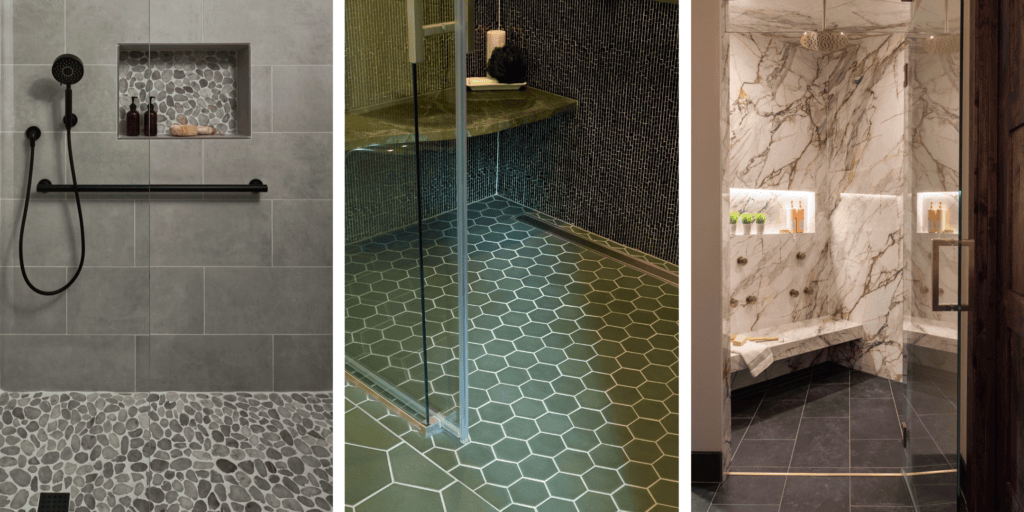
- Textured or matte tile: Many porcelain tiles come in a matte or lightly textured finish that offers more grip than polished surfaces, in looks ranging from natural stone to wood.
- Small-format tile in the shower: Smaller tiles mean more grout lines, and more grout lines mean more traction underfoot. Mosaics are also a chance to add pattern and color.
- Ask about slip ratings: Tile manufacturers often publish slip-resistance ratings. Your designer can help you compare options for wet areas.
- Curbless showers: A zero-threshold shower removes the step-over entirely. It looks open and modern, and it works for walkers or wheelchairs if needs change.
Layered lighting
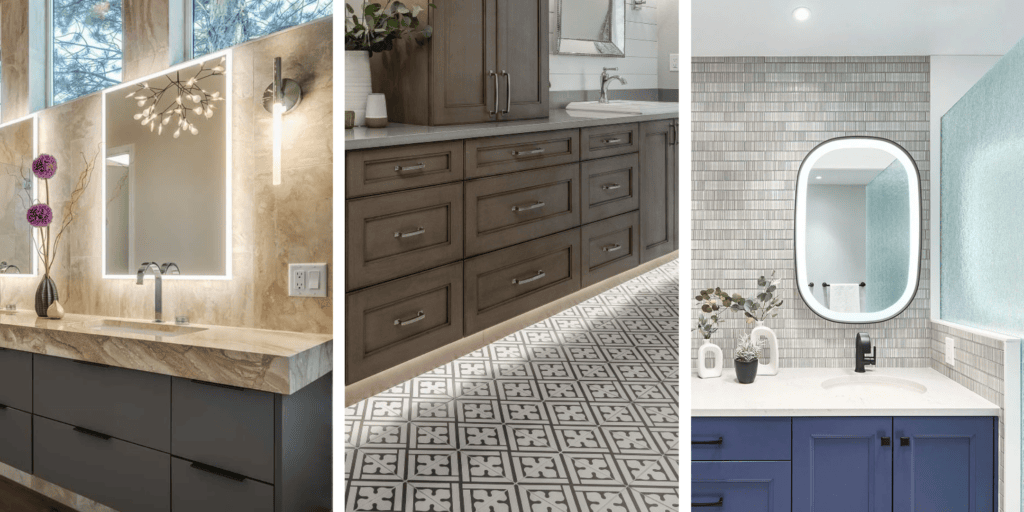
Good lighting may be the most underrated safety upgrade, and it’s also one of the most flattering. The goal is light from several sources, so there are no dark corners or harsh shadows.
- Task lighting: A lighted mirror and/or sconces beside the mirror light the face evenly, which helps with shaving, makeup, and reading medication labels.
- Ambient lighting: Recessed or ceiling fixtures brighten the whole room. A light inside the shower is worth considering, too.
- Night lighting: Low-level lights under a floating vanity, along the toe kick, or along the path from bedroom to bathroom make middle-of-the-night trips safer without the glare of overheads.
- Easy controls: Dimmers, motion sensors, and rocker switches placed where you naturally reach all make lighting simpler to use.
The same layers that make a bathroom safer also make it feel warm, calm, and spa-like.
Plan ahead, and you won’t have to compromise.
The best time to think about aging in place is before you need to. When safety features are part of the original design, they can be chosen for how they look as well as how they work. Wall blocking, outlets, and a curbless shower are all far simpler to build in now than to retrofit later.
You also don’t have to do everything at once. A remodel can include the infrastructure for future upgrades, so your home is ready to adapt as your needs do.
If you’re starting to think about a bathroom that will serve you well for decades, our designers are happy to talk through options. Reach out to our Client Experience team, and they will pair you with a Neil Kelly design consultant who specializes in beautiful, accessible bathrooms.
Neil Kelly. Generations of craft and care.