







Choosing Kitchen Appliances for Holiday Hosting: What Our Designers Have Learned
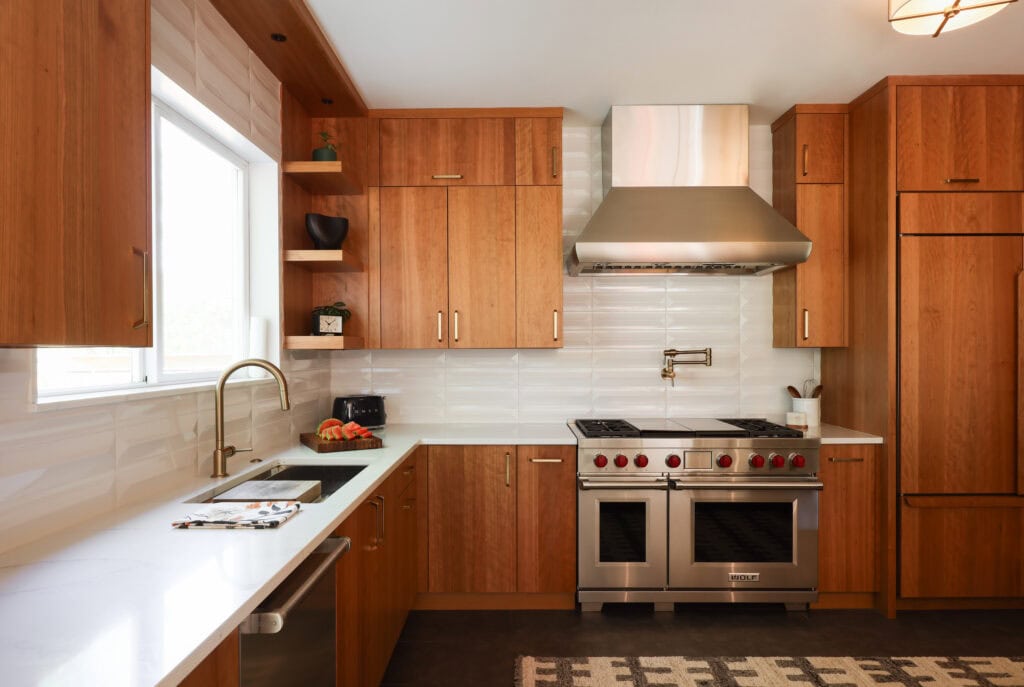
Holiday hosting is the ultimate stress test for a kitchen. The oven runs for hours, the refrigerator is packed to the edges, and the dishwasher cycles late into the night. It’s often when an appliance that’s been limping along finally gives out.
Replacing it isn’t always simple. The new range is a few inches wider than the old one, or the refrigerator you want is designed to sit flush with cabinetry you don’t have. Once the cabinets have to change, the countertop has to change, and suddenly a full kitchen remodel is in question.
Whether you’re replacing one appliance or rethinking the whole kitchen, reliability matters. Here’s what new data shows about which appliances hold up, what our designers have seen over decades of kitchen projects, and which features matter most for people who love to host.
When one appliance leads to a whole new kitchen
Amanda Armstrong Sava, former design consultant and now general manager of Neil Kelly Seattle, sees this pattern constantly. “I would hazard a guess that more than 50% of our kitchen remodels start as an appliance replacement and then just snowball from there,” she says.
“Frequently we find that a built-in oven fails, and that size isn’t made anymore, or they really want a bigger oven because they couldn’t really get their Thanksgiving turkey in that one. They want the next size up, but that means the cabinet opening has to be larger. If that opening needs to be larger, they need a new row of cabinets, and so on. It’s sort of like the book If You Give a Mouse a Cookie!”
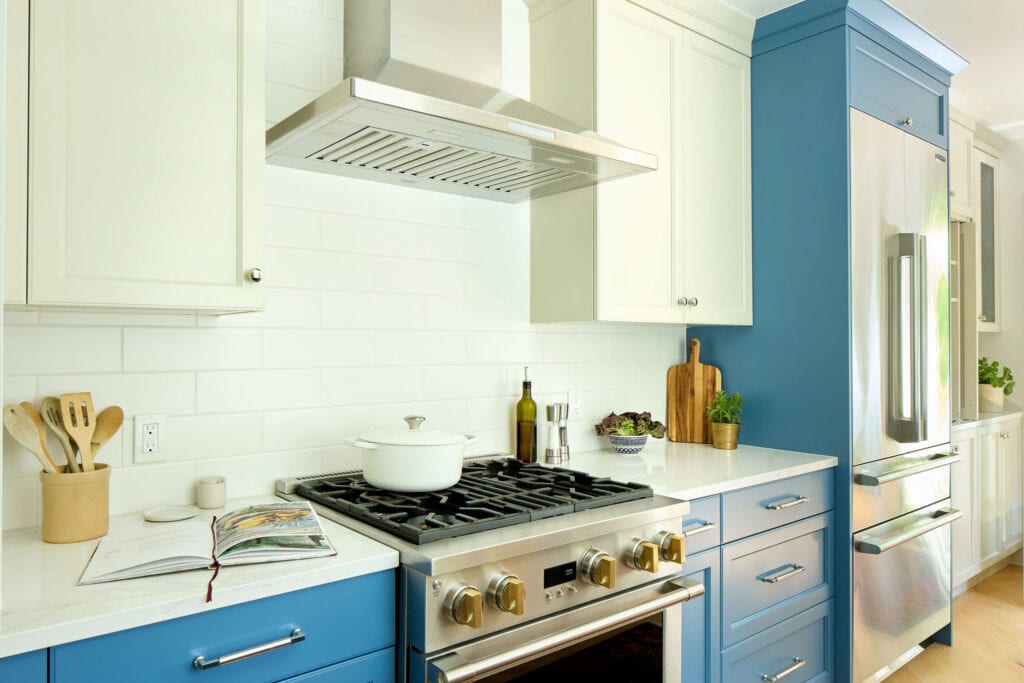
Kathleen Donohue, a design consultant in Bend with more than 50 years of experience, hears these stories too. “Clients love to recount how their complete kitchen remodel began with a failed appliance,” she says. A new counter-depth refrigerator turns out to be too tall for the cabinets above it. A failed cooktop leads to new countertops, backsplash, sink, faucet, and lighting in a “while we’re at it” kind of process. Even a same-size swap can surprise you. “You may be replacing a cooktop with one that is the exact same size, but changing from electric to gas or to induction, which is electric but draws significantly more power than standard electric cooktops do.”
Tastes are changing, too. “In the past, a 30-inch range was pretty standard, but now even clients with smaller kitchens are interested in upgrading to a 36-inch range or incorporating double ovens and a separate cooktop,” says Kristi Street, design consultant in Seattle. “These changes often require reconfiguring cabinetry and countertops, which can become the starting point for a larger kitchen remodel.”
What the 2026 J.D. Power study found
J.D. Power released its 2026 U.S. Appliance Reliability & Service Study on October 29, 2026. It measures problems per 100 appliances (PP100), reported by owners of appliances bought within the past one to three years. A lower score means fewer problems.
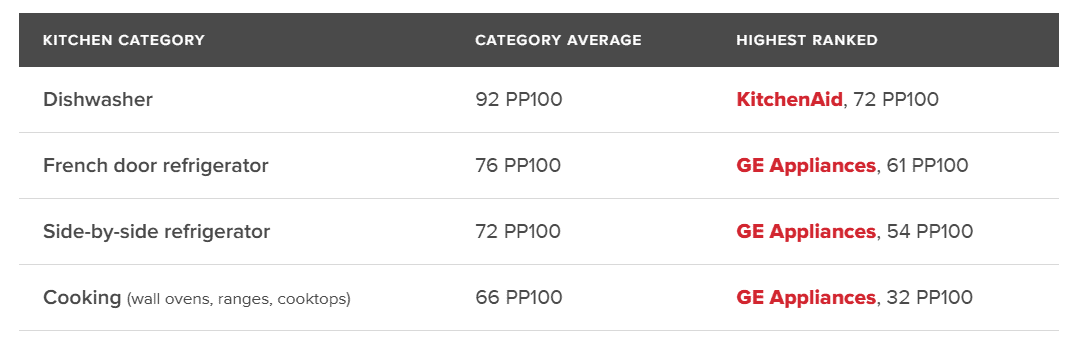
If you host often, the study points out two important issues:
- Dishwashers have the most problems of any kitchen appliance. They also work the hardest during the holidays, running load after load once the meal is over.
- Controls are a common weak spot on cooking appliances. Owners reported 8.0 problems per 100 appliances, just with control panels and touchpad buttons alone. When you visit a showroom, try the controls yourself and see how simple they are to use.
The study has two limits. It only ranks mass-market brands, not the luxury brands many entertainers consider. And it looks at appliances that are only one to three years old. As Amanda puts it, “All brands, luxury or not, are generally reliable for the first 1 to 5 years. It’s after the 5-year mark that you have to look at.”
What about luxury brands?
Consumer Reports’ owner surveys do include luxury brands, and they look at a longer stretch: how likely an appliance is to break or stop working within its first five years. In October 2026, Consumer Reports named Thermador the most reliable brand for dishwashers, French-door refrigerators, and electric smoothtop cooktops for the 2027 model year. In its 2026 ranking of 24 kitchen brands across categories, Thermador and Wolf/Sub-Zero tied for fourth.
Yale Appliance, a Boston-area retailer, tracks first-year service calls on the brands it sells. In its most recent report, Miele has a 7.43% first-year service rate, and its dishwashers do even better at 5.58%, the best in their category. Yale doesn’t publish Sub-Zero and Wolf numbers due to its agreement with the brand, but it calls them among its most reliable.
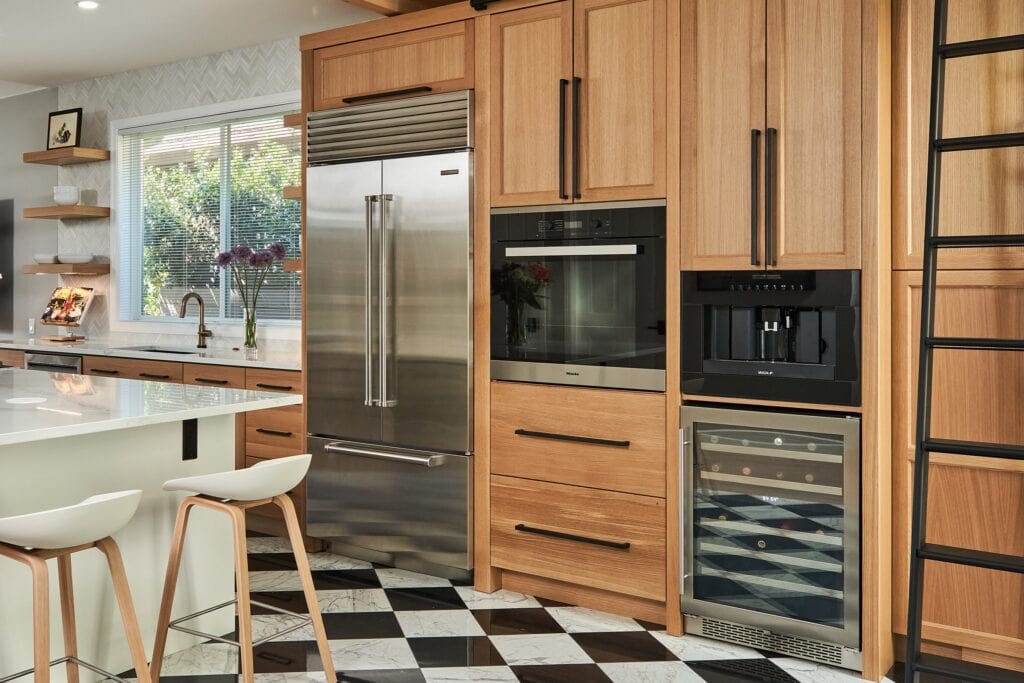
Our designers’ experience points the same way. “In my 25 years of designing kitchens, Sub-Zero and Wolf have consistently impressed me with their longevity and reliability,” says Selah Ewert, general manager of Neil Kelly Bend. She can’t recall a service issue with a Sub-Zero or Wolf appliance on any of her projects.
“As a rule of thumb, you get what you pay for in appliances,” Kathleen says. She has remodeled kitchens where a 25-year-old Sub-Zero was still going strong. “There’s always the exception, where a high-end appliance causes nothing but trouble from the start, which can be true with lesser brands as well.”
Both Kathleen and Amanda recommend starting with features, not brand names. “I think that in general appliances should be picked on how well they work for you and then the reliability,” Amanda says. Kathleen agrees: “I usually advise clients not to opt for the higher-end product unless they really need and can use all the fancy features.”
Appliances built for entertaining
For homeowners who host, our designers often specify Sub-Zero/Wolf/Cove, Thermador, and Miele. “When you’re hosting, you’re often preparing multiple dishes at once, and having the right appliances makes a big difference,” Selah says. “Whether that’s multiple ovens, warming drawers, wine storage, or additional refrigeration, it’s about thinking through how they cook, entertain, and move through their space.”
Amanda points to two more reasons. Luxury brands are typically the ones made panel-ready, so they can disappear into the cabinetry for a cohesive look. They also tend to offer features made for entertainers, like warming lights in the hood and warming drawers.
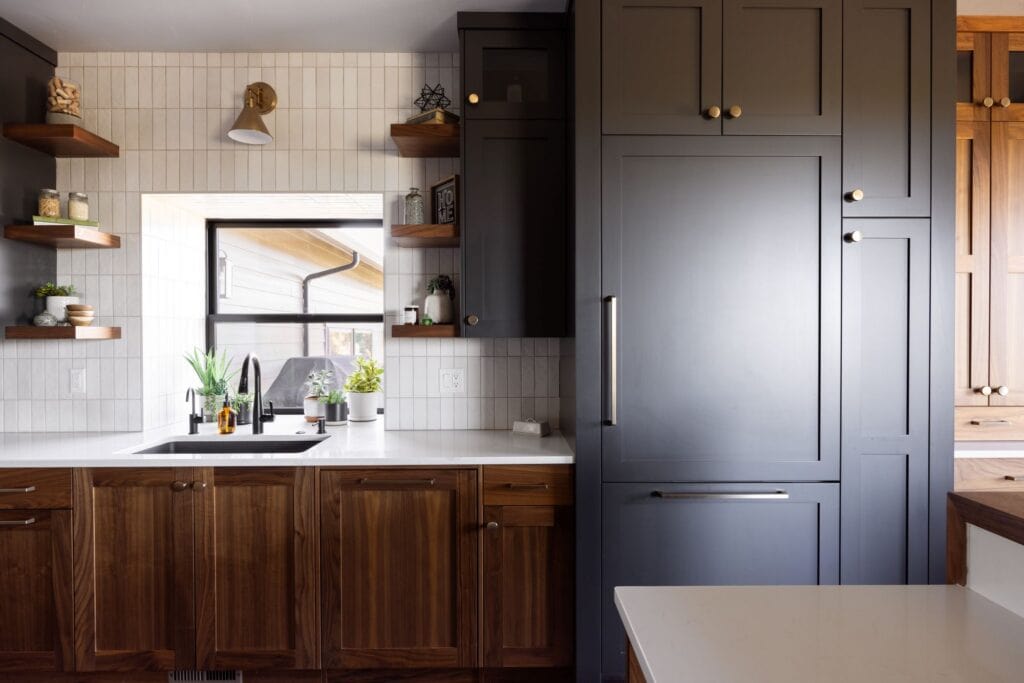
She also offers a caution most people don’t hear. “Some built-in refrigerators don’t even have enough interior space to accommodate a half-sheet baking pan, a large charcuterie board, or a party platter,” she says. “The most beautiful appliances aren’t necessarily the most practical, especially if you love to cook or entertain.” Before you commit, measure your largest pans and platters and check them against the interior dimensions.
Kathleen starts by learning how her clients actually entertain. Do they cook on a large scale, or do they have a favorite caterer? “I always ask!” she says. She also asks about knives, cookware, specialty equipment, and extra sets of dishes, glassware, and platters. “This client may need a butler’s pantry as well as a new kitchen.”
Not every host wants their appliances to disappear. “We’re also seeing more interest in heritage-inspired appliances that make a design statement, with decorative details, mixed metals, and colored enamel finishes,” Kristi says. “Brands like ILVE, Big Chill, and True Residential offer beautiful options that allow appliances to become a focal point of the kitchen rather than something we try to conceal.” She has an ILVE range in her own kitchen, with a gas cooktop and an electric oven. “I’ve been especially impressed with the oven,” she says.
Here’s what to look for and what each choice means for the space around it.
Ranges
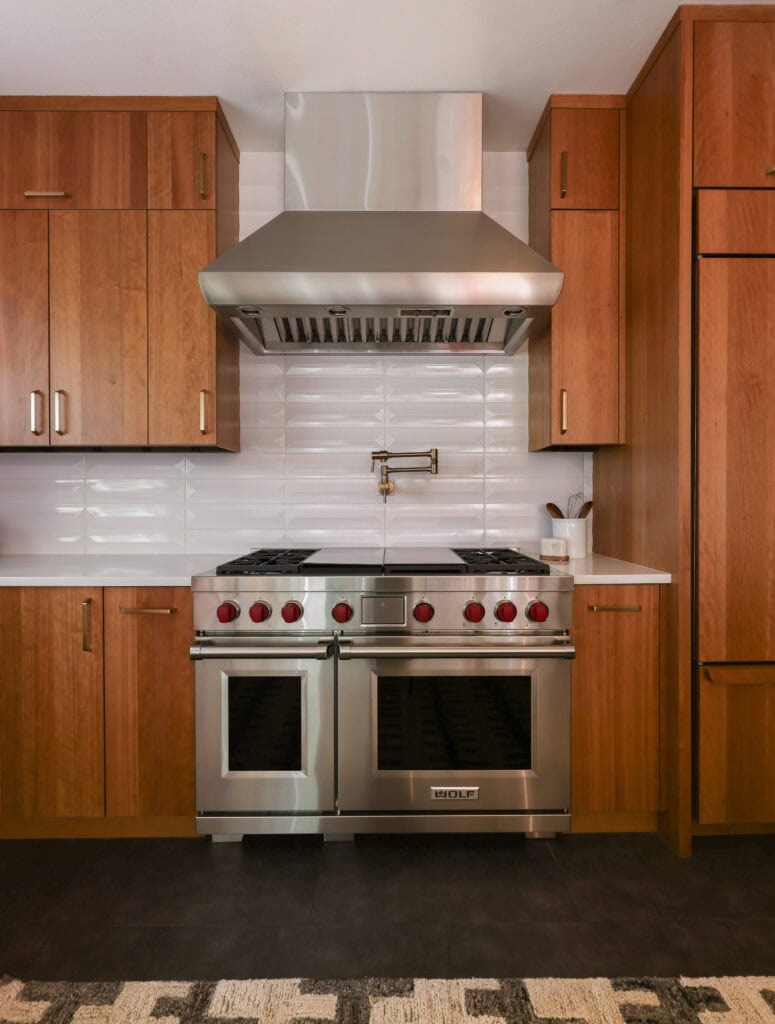
A 60-inch range gives you two ovens and room for a griddle beside the burners. Wolf’s 60-inch dual-fuel range has two ovens, each with 5.1 cubic feet of capacity and 3.2 cubic feet of usable space. That difference between overall and usable capacity is what determines whether the turkey and the sides fit at the same time. Thermador’s Pro Grand 60-inch range is available with a double griddle, and some configurations add a steam oven or a warming drawer.
What it means for your kitchen: Moving up from a standard 30-inch range means a wider cabinetry opening, a larger hood, and possibly new electrical service. Wolf’s 60-inch dual-fuel range calls for a 50-amp dedicated circuit.
Refrigeration
Separate refrigerator and freezer columns can be paired for far more cold storage than a single unit. Sub-Zero’s 30-inch integrated freezer column, for example, has 15.5 cubic feet of space and an automatic ice maker. Wine columns can sit alongside them.
If platters and sheet pans are your concern, Kristi points to another option. “True Residential offers refrigerators that can accommodate full-size commercial sheet pans, which is incredibly convenient when preparing food ahead of a party or storing large platters.”
What it means for your kitchen: Columns are panel-ready and built into the cabinetry. Choosing them is a design decision, not a simple swap.
Dishwashers
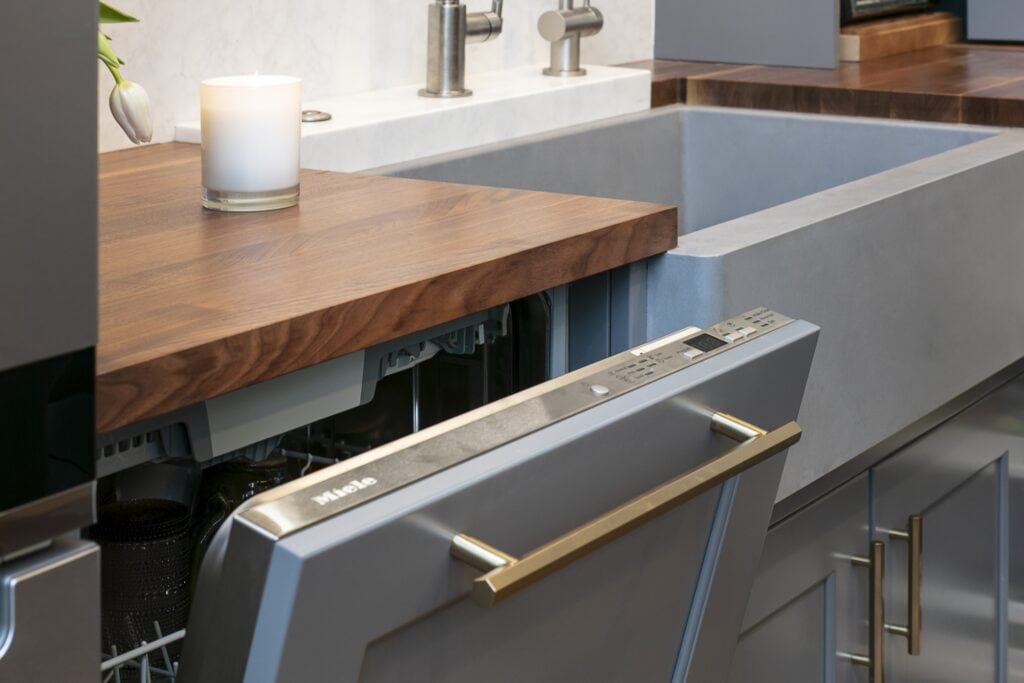
Some Miele dishwashers hold up to 16 place settings, and their adjustable cutlery tray can make room for stemware in the upper basket. Cove, Sub-Zero and Wolf’s dishwasher brand, offers a five-year warranty covering parts and labor.
Kristi is a fan of Miele’s AutoOpen drying feature, “which automatically opens the door slightly at the end of the cycle to release moisture and help dishes dry more thoroughly.” She also recommends Cove for hosts: “They’re very quiet, have flexible interior racks, and use advanced filtration and drying systems to get dishes clean and dry.”
What it means for your kitchen: These models feature a standard 23 5/8-inch width, meaning they fit perfectly into a standard 24-inch cabinetry cutout. But, if you want a panel-ready model, it will need a cabinet front made to match the rest of your kitchen.
Designing around larger appliances
“I always think of the Christmas tree example—how many times do we pick out the perfect tree to only find it won’t fit into the room?” Kathleen says. “Keep the scale of your kitchen in mind.” In a small kitchen, a 60-inch professional range may not be the best choice. And a wall oven with a separate cooktop costs you counter space. “That’s where your professional design partner can help you make informed tradeoffs,” she says.
Kristi pays close attention to door swings, ventilation, and spacing between appliances. “We also want to maintain a comfortable flow through the kitchen, especially when multiple people are cooking or entertaining,” she says.
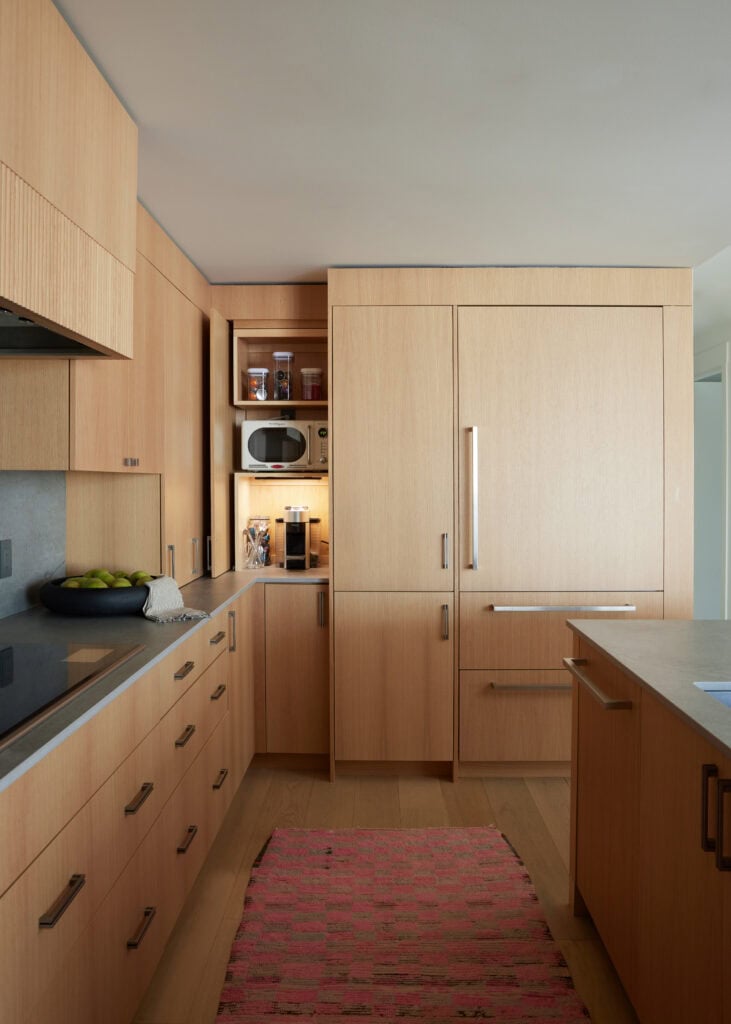
Larger appliances can also cost you storage. With Sub-Zero and some other built-in refrigerators, you may lose the upper cabinets above the refrigerator, so Kristi makes up that space with floor-to-ceiling cabinetry or extra island storage. She’s also designing more upper cabinets that come all the way down to the countertop. “These are great for homeowners who entertain because they can conceal coffee stations, small appliances, or even countertop microwaves.”
As Kathleen puts it, “you’ll still need space to store all that cookware!”
Reliability includes service
Even the best appliance needs service eventually, and how that service goes matters. In J.D. Power’s 2026 study, overall satisfaction with appliance service scored a 743 on a 1,000-point scale. Timing made a big difference: satisfaction was 757 when the technician arrived within the scheduled window and 638 when they didn’t.
Kristi encourages homeowners to look past features and finishes to the manufacturer’s warranty, local service technicians, and long-term support. “This is particularly important with appliances that are integrated into custom cabinetry, where replacing them isn’t always as simple as swapping out a freestanding appliance,” she says.
That’s a good reason to buy from a local showroom with established service relationships.
If your appliance fails this season
A kitchen remodel started now won’t be finished before the holidays. If an appliance gives out this month, a repair or a replacement is the practical way through the season. The good news, according to Amanda: “In general you can always find a replacement size for a failed appliance. The question is whether or not you’re going to like the replacement options.”
Planning ahead takes the pressure off. Shortly after one of Kristi’s clients signed her remodeling contract, her dishwasher broke and flooded her kitchen and basement. Because new appliances were already part of the plan, the timing worked with the construction schedule. “A thoughtful design-build process takes time, so planning ahead allows homeowners to make those decisions without the pressure of an unexpected appliance failure,” Kristi says.
Kathleen sees the same value in planning before work begins. Understanding how one change affects everything else lets homeowners make informed choices instead of scrambling for solutions, materials, and trade contractors on the fly, which she says can be “expensive and stressful.”
A conversation with a designer this winter can mean a kitchen ready for next year’s gatherings, with appliances chosen for how you actually cook and host.
Planning a kitchen that’s ready for a crowd
A failed appliance can be the start of a kitchen that works better for the way you host. Selah encourages homeowners to think about the kitchen as a whole, “even when the project starts with something as simple as replacing a dishwasher.”
With design-build, one team handles the design, the cabinetry, the electrical work, and the installation. One team. No coordination headaches.
Tell us about your project and we’ll match you with a Neil Kelly designer for a free in-home remodeling consultation.
Neil Kelly. Generations of craft and care.